

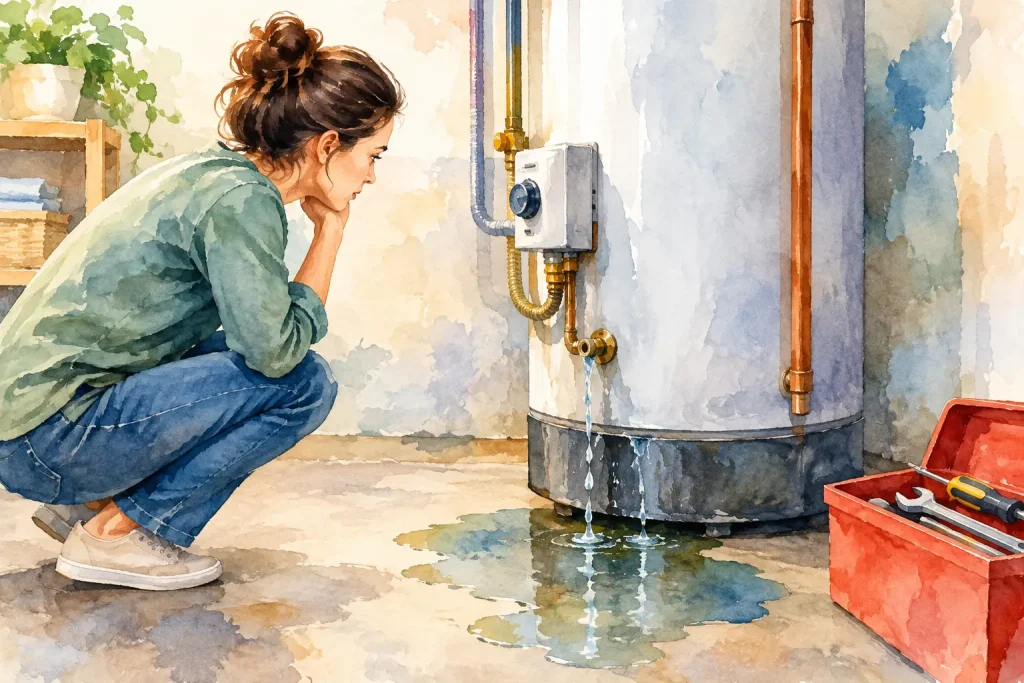
A puddle under the water heater is not a problem to ignore until the weekend. If you are asking, “why is water heater leaking,” the answer can range from a loose connection that needs a quick repair to a corroded tank that needs immediate replacement. The source of the water matters, and acting early can protect your floors, walls, belongings, and hot water supply.
Start by looking carefully without touching hot pipes, electrical components, or standing water near a gas appliance. Dry the area around the heater if it is safe, then watch for fresh water to identify where the leak begins. If water is spreading quickly, shut off the cold-water supply valve above the unit if you can reach it safely and call for professional help.
Why Is Your Water Heater Leaking?
Water heaters have several connections, valves, and internal components that can leak. Water naturally travels downward, so a drip at the top can run down the tank and look like a leak from the bottom. That is why a proper diagnosis starts at the highest visible point and works down.
A small drip may still deserve prompt attention. Even slow leaks can cause mold, damage framing, rust nearby equipment, and raise utility costs. For landlords and property managers, a leaking water heater can also become a tenant safety issue and a costly turnover repair if it is left unaddressed.
Condensation can look like a leak
In Oklahoma, humid weather and cold incoming water can create condensation on a tank, especially when the heater is working hard. Condensation usually appears as light moisture across the outside of the tank rather than a steady drip from one fitting or valve.
Wipe the tank dry and check it again after the unit has run. If moisture returns only as a thin film and there is no pooling water, condensation may be the cause. If you see drips forming in one location, assume there is a plumbing issue until a technician confirms otherwise.
A loose cold-water or hot-water connection
The pipes at the top of the water heater are common leak points. Over time, fittings can loosen, threaded joints can fail, and corrosion can develop around the connections. You may see water on top of the heater, wet insulation around a pipe, or a drip that follows the side of the tank downward.
This repair may be straightforward, but it depends on the condition of the piping and fittings. Overtightening a corroded connection can make the damage worse. A plumber can determine whether a connection simply needs repair or whether aging pipe should be replaced to prevent another leak.
The temperature and pressure relief valve is discharging
The temperature and pressure relief valve, often called the T&P valve, is a critical safety device. It is typically located near the top or side of the tank, with a discharge pipe running down toward the floor. This valve opens when pressure or temperature inside the tank becomes unsafe.
A little water at this pipe is not something to cap, plug, or dismiss. The valve could be faulty, but it may also be responding to excessive water pressure, overheating, or a malfunctioning expansion tank. Replacing the valve without finding the underlying reason can leave the real safety concern unresolved.
If the relief valve is actively releasing hot water or steam, stay clear of the heater and call for emergency plumbing service. Do not attempt to force the valve closed.
The drain valve is leaking
Near the bottom of the tank, you will find a drain valve used for flushing sediment and draining the unit during service. The valve can leak if it has not closed fully, if its washer has worn out, or if mineral buildup prevents a proper seal.
A drip from this location is often repairable. Still, the surrounding area should be inspected closely. Water running from a higher point can collect at the drain valve and create a misleading diagnosis.
Sediment buildup is damaging the tank
Hard water minerals settle at the bottom of a water heater over time. That sediment reduces efficiency, causes popping or rumbling sounds, and can contribute to corrosion. In a gas water heater, sediment can make the burner work harder. In an electric model, it can interfere with heating elements.
Routine flushing helps reduce sediment, but it is not a cure for a tank that has already corroded through. If rust-colored water, recurring leaks, or loud operation are present, a professional assessment can help determine whether repair makes financial sense.
The internal tank has corroded
A leak from the bottom seam or body of the tank is often the most serious cause. Water heaters have an internal steel tank protected by a sacrificial anode rod. As that rod wears down, the tank becomes more vulnerable to corrosion.
Once the tank itself develops a crack or rusted opening, it cannot be reliably repaired. The practical solution is replacement. Waiting can turn a small leak into a tank failure that releases dozens of gallons of water into a garage, utility room, closet, business space, or occupied rental property.
What to Do When a Water Heater Is Leaking
Your first goal is damage control, not a full repair. If the leak is steady or spreading, turn off the cold-water supply valve at the top of the heater. For an electric water heater, switch off power at the breaker before working near the unit. For a gas water heater, turn the gas control to the off position only if you smell no gas and can do so safely.
Move boxes, furniture, and stored items away from the area. Use towels or a wet vacuum to contain minor water, but do not stand in water around electrical equipment. Take photos of the leak source and any damage if you need records for a landlord, property manager, or insurance claim.
Avoid draining the tank unless a qualified technician directs you to do so. Water inside may be extremely hot, and an old drain valve can fail when disturbed. Do not use tape, sealant, or a temporary cap on a pressure relief valve discharge line. Those shortcuts can create a serious safety hazard.
When to Call a Plumber Right Away
Some water heater leaks require immediate attention, especially when they involve hot water, gas appliances, electrical equipment, or a failing tank. Call for service promptly if you notice any of the following:
- Water pouring from the tank, a valve, or a pipe connection
- Hot water or steam coming from the relief valve discharge pipe
- Rust, corrosion, or pooling water around the base of the tank
- No hot water along with a visible leak
- A gas smell, hissing sound, or signs of water near electrical wiring
For commercial properties, speed matters even more. A water heater issue can interrupt restrooms, kitchens, employee operations, tenant services, and customer access. Quick diagnosis helps limit downtime and gives property stakeholders a clear recommendation before the damage grows.
Repair or Replace: How to Make the Right Call
A leaking connection, drain valve, or relief valve may be repairable when the tank is otherwise in good condition. Tank age is a major factor. Traditional storage water heaters often last roughly eight to 12 years, although water quality, maintenance history, installation quality, and daily demand all affect service life.
Replacement is usually the better long-term choice when the tank itself is leaking, corrosion is widespread, or repairs are beginning to add up. It may also be an opportunity to select a properly sized unit for your household or facility. An undersized heater struggles to keep up; an oversized one can cost more to purchase and operate than necessary.
A direct inspection should include the leak source, tank condition, water pressure, venting or electrical setup, shutoff valves, and the condition of nearby piping. That approach prevents a surface-level repair from missing the problem that caused the leak in the first place.
If your water heater is leaking in Oklahoma City or the surrounding area, OKC Drainworks can help identify the cause, explain your options clearly, and make the repair or replacement with long-term reliability in mind. A fast call while the leak is small can save you from a much larger cleanup later.