
A toilet that gurgles when the washer drains is not a small annoyance. Neither is a shower drain that backs up after a hard rain. In many older neighborhoods, those are early warnings that tree root sewer removal Oklahoma City property owners need may be approaching. Roots can enter a sewer line through a joint, crack, or aging connection, then turn a minor opening into a serious blockage.
The good news is that a root problem does not automatically mean your entire sewer line must be replaced. The right answer depends on where roots entered, how much pipe damage exists, and whether the line has a history of repeated backups. A camera inspection and a direct assessment give you facts before you spend money on a repair.
Why Tree Roots Find Their Way Into Sewer Lines
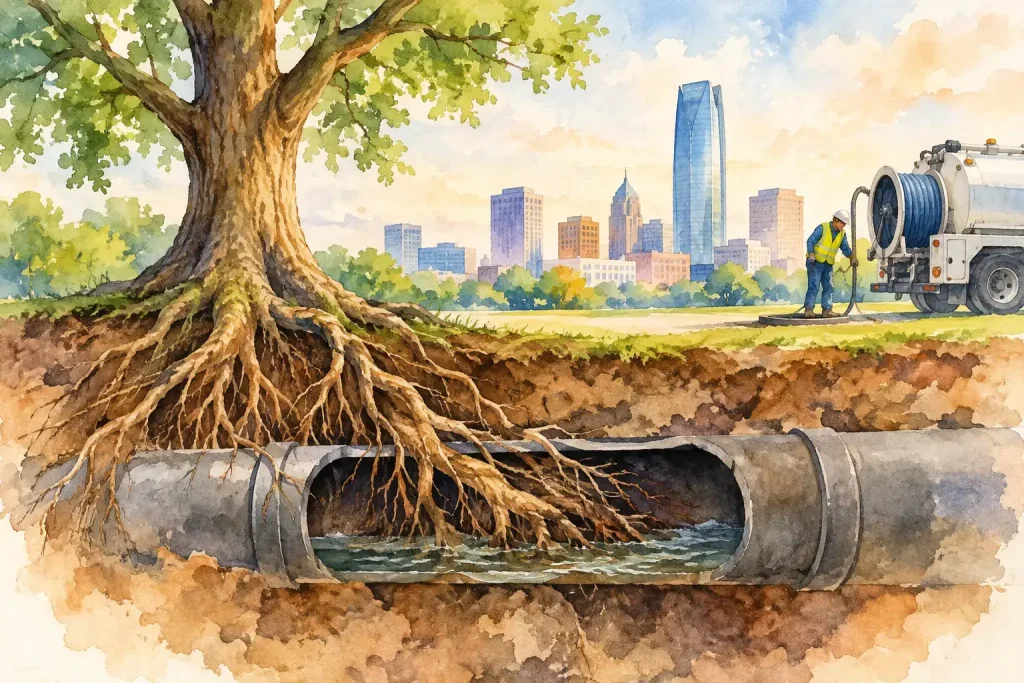
Tree roots do not seek out pipes because they are aggressive. They seek moisture, oxygen, and nutrients. A sewer line with a loose joint, small fracture, deteriorated pipe wall, or failed connection can release enough moisture to attract nearby roots.
Once a fine root strand enters the pipe, it has a reliable water source. It grows, branches, and catches toilet paper, grease, wipes, and other debris moving through the line. What begins as a slow drain can become a complete obstruction or a sewage backup inside the property.
Older clay, cast-iron, Orangeburg, and concrete sewer lines are often more vulnerable, but newer systems are not immune. Ground movement, improper installation, or a damaged connection can create a pathway even in a relatively modern pipe. Oklahoma City’s clay soils, changing moisture conditions, and mature trees can all add stress to underground plumbing over time.
Signs You May Need Tree Root Sewer Removal in Oklahoma City
A single slow sink may be a local drain clog. When several fixtures act up at the same time, the issue is more likely in the main sewer line. Pay attention when toilets bubble, water rises in a tub after flushing, or drains slow down throughout the house.
Another clear warning is recurring trouble. If the same line has been snaked more than once and symptoms return within months, roots or pipe damage may be present. A temporary opening in the blockage is not the same as removing the cause.
Outside, look for unusually green or fast-growing patches over the sewer route, sinkholes, wet spots with no clear explanation, or a persistent sewer odor near the yard. These signs do not prove roots are the problem, but they warrant a professional inspection before wastewater finds its way into the home or business.
Commercial properties may notice the issue differently. Restrooms that back up during busy periods, floor drains that drain poorly, or repeated service interruptions can point to a main-line restriction. For a restaurant, retail space, rental property, or office, waiting for a full backup can mean cleanup costs and lost operating time.
What a Proper Diagnosis Looks Like
Root removal should start with identifying the actual condition of the sewer line. Clearing a drain without checking the pipe can leave you guessing about whether the blockage is roots, grease buildup, a collapsed section, or a foreign object.
A sewer camera inspection sends a small camera through the line to locate the obstruction and show its condition. The technician can see whether roots are light and contained at one joint or dense enough to fill a significant section of pipe. The inspection can also reveal offset joints, cracks, bellies where waste collects, and pipe sections that have deteriorated beyond a simple cleaning.
Location matters. A blockage near the house may be easier to access than one under a driveway, landscaped area, or commercial parking lot. The camera helps establish where the problem is so the repair recommendation is based on the line itself, not an assumption.
How Professionals Remove Roots From a Sewer Line
Mechanical root cutting is commonly used when roots have entered the pipe but the line still has enough structural integrity to remain in service. A specialized cutting head travels through the sewer line and cuts away root growth, restoring flow. This is more thorough than forcing a basic cable through a dense root mass.
Hydro jetting may also be appropriate in some cases. It uses high-pressure water to clear debris, grease, and lighter root material from the inside of the pipe. It can clean a line effectively, but it is not the right first move for every pipe. If a camera inspection shows a badly broken, brittle, or collapsed line, high pressure may not be advisable.
Chemical root treatments are sometimes used after mechanical cleaning as a maintenance measure. They may slow regrowth at entry points, but they do not repair a broken pipe, seal a failed joint, or replace a damaged section. They also need to be selected and applied carefully. Store-bought chemical products can create false confidence, and harsh drain chemicals may damage plumbing or create a safety issue for anyone working on the system later.
When roots have exposed major damage, repair is the durable solution. Depending on the line and access conditions, that could mean replacing a short damaged section, rehabilitating part of the line, or replacing the sewer lateral. The best option depends on the extent of damage, pipe material, depth, and whether the line has repeatedly failed.
When Cleaning Is Enough and When Repair Makes More Sense
Root cutting can be a practical answer when root intrusion is limited and the pipe is otherwise sound. It restores service quickly and can be paired with planned maintenance. This approach may make sense for a property owner who wants to manage an older line while budgeting for future work.
It becomes less practical when backups keep returning, roots enter through multiple damaged areas, or the pipe has shifted, cracked, or collapsed. Repeated emergency clearing can cost more over time than addressing the failing section correctly. It also leaves the property exposed to another backup at the worst possible time.
There is no one-size-fits-all timeline. Some lines need periodic cleaning every year or two, while others remain clear much longer after a proper repair. A clear camera inspection lets you weigh the cost of maintenance against the risk and expense of a larger failure.
What to Do When You Suspect a Main Sewer Backup
Stop using water where possible. Do not run the dishwasher, washing machine, or additional fixtures in an attempt to push the blockage through. More water can force sewage into tubs, showers, floor drains, or lower areas of the building.
If wastewater is already coming up indoors, keep people and pets away from the affected area. Sewage exposure presents health risks. Avoid using chemical drain cleaners or repeatedly plunging multiple fixtures, especially if the main line is blocked. Those actions rarely solve root intrusion and can make the situation more hazardous.
Call for professional drain service promptly, particularly if sewage is backing up, multiple fixtures are affected, or the property has tenants, customers, or employees on site. OKC Drainworks provides direct assessments and 24/7 response for urgent plumbing failures, with recommendations based on what the line actually needs.
Reduce the Chances of Roots Coming Back
Removing roots restores flow, but prevention starts with knowing where the sewer line runs and what condition it is in. Before planting a new tree, consider its mature root spread and keep it away from the sewer route. Large, thirsty trees deserve extra distance.
Avoid flushing wipes, paper towels, feminine products, grease, or so-called flushable items. Roots catch debris more easily when the line is already carrying buildup. For properties with older sewer lines or a known root history, schedule an inspection or maintenance cleaning before the season of heavy use or before a backup becomes an emergency.
A sewer line problem is stressful because it stays hidden until it disrupts your day. Acting when you first notice gurgling, slow drains, or repeat clogs gives you more repair options, more control over cost, and a better chance of keeping wastewater where it belongs.