
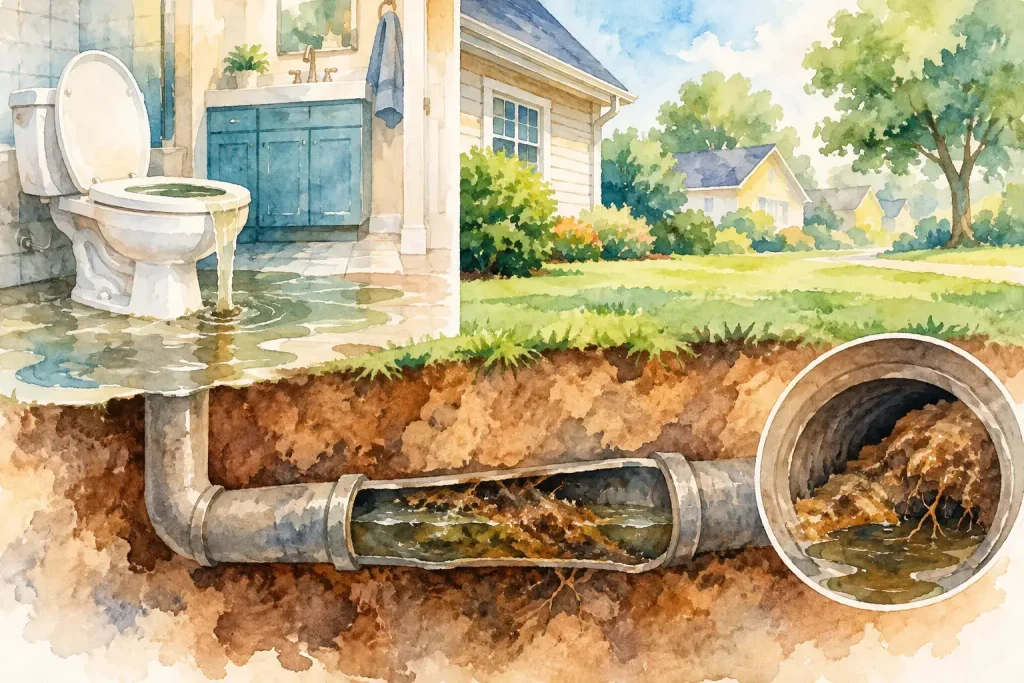
A sewer problem rarely starts with a dramatic flood. More often, it begins with one slow drain, an unfamiliar gurgling sound, or a toilet that acts differently than usual. Knowing the signs of sewer line backup gives you a chance to protect your home, business, and belongings before wastewater enters the building.
A clogged sink drain can be a localized issue. A sewer line backup is different. Your main sewer line carries wastewater from every drain in the property to the municipal sewer system or septic system. When that line becomes blocked, damaged, or overwhelmed, the wastewater has nowhere to go except back through the lowest available drains.
1. Multiple Drains Are Slow at the Same Time
One slow bathroom sink may be caused by hair, soap residue, or buildup near that fixture. But when the kitchen sink, shower, tubs, and toilets all drain slowly, the problem may be farther down the system.
Pay close attention to patterns. If the shower drains slowly every time someone flushes a toilet, or if the washing machine causes water to rise in a nearby tub, the restriction may be in the main sewer line. This is especially common in older homes with aging pipes, root intrusion, or years of grease and debris buildup.
Do not assume a chemical drain cleaner will solve a whole-property drainage issue. These products rarely clear a main line blockage and can damage certain pipe materials or create a hazard for the technician who eventually services the line.
2. Toilets Gurgle, Bubble, or Have Unstable Water Levels
A toilet should flush, refill, and remain quiet. Gurgling after a flush, bubbles in the bowl, or water levels that rise and fall without explanation can signal trapped air in the drain system. That air is often being forced backward by a blockage in the sewer line.
The same can happen in tubs and showers. You may hear a glugging sound when water drains or see bubbles appear after using another fixture. These are not normal plumbing noises, particularly when they occur repeatedly or involve more than one bathroom.
A venting issue can sometimes cause similar sounds, so diagnosis matters. A qualified plumber can determine whether the issue is a clogged vent, a fixture drain problem, or a developing main sewer backup.
3. Water Backs Up Into a Tub, Shower, or Floor Drain
This is one of the clearest and most urgent signs of sewer line backup. When you flush a toilet or run the washing machine, wastewater may come up through a shower drain, bathtub, utility sink, or floor drain.
Water takes the path of least resistance. In many homes, a basement floor drain, first-floor shower, or lower-level tub is the lowest point connected to the sewer system. When the main line is blocked, that is where the backup often appears first.
Treat any water coming up through a drain as potentially contaminated. Keep children and pets away, avoid walking through the area, and do not use more water than necessary. Flushing, showering, running the dishwasher, and doing laundry can all add to the backup and increase the damage.
4. You Smell Sewage Indoors or Near the Property
A persistent sewer odor is not something to cover with air freshener and forget. The smell can indicate wastewater sitting in a blocked pipe, a damaged sewer line, a dried-out drain trap, or a break in the system.
If the odor is isolated to one unused bathroom, pouring water into the floor drain or sink may restore the water seal in the trap. If the smell continues, grows stronger, or appears in several areas, schedule an inspection. Odors near the yard, driveway, or exterior cleanout can also point to a sewer line problem outside the building.
Sewer gases can make indoor spaces unpleasant and may indicate a sanitation issue. The source should be identified instead of masked.
5. The Yard Has Wet, Sunken, or Unusually Green Patches
Not every sewer line problem appears inside first. A cracked, collapsed, or leaking underground pipe can release wastewater into the soil. You may notice soggy areas when there has been little rain, soft spots in the lawn, a sunken section of ground, or a patch of grass that grows faster and greener than the surrounding yard.
Tree roots are a frequent cause. Roots naturally seek moisture and can enter small openings in older sewer pipes. Once inside, they expand and collect paper, grease, and other waste until flow becomes restricted. In Oklahoma City, shifting soil and aging pipe materials can also contribute to cracks, separated joints, and line misalignment.
A wet yard does not automatically mean the sewer line is failing. Irrigation leaks, rain runoff, and broken water lines can create similar symptoms. Professional camera inspection is the practical way to find the exact source before excavating or approving repairs.
6. A Cleanout Is Overflowing
The sewer cleanout is an access point that allows a plumber to inspect and clear the main sewer line. It may be located outside near the foundation, in a utility area, or along the side of the property. If water or sewage is coming out of the cleanout cap, the line is likely blocked downstream from that point.
Do not remove a cleanout cap yourself if you suspect pressure has built up behind it. Wastewater can discharge quickly and create a serious mess. Keep the area clear and call for service. An overflowing cleanout is often a sign that the blockage needs immediate attention before wastewater backs up inside.
7. Sewage or Dirty Water Appears at a Floor Drain
A floor drain backup can happen after a heavy storm, but it can also indicate a main sewer line obstruction. Commercial properties, laundry rooms, garages, and older homes may have floor drains that become the first exit point for backed-up wastewater.
The appearance of the water matters. Clear rainwater may suggest drainage or stormwater issues. Dark water, toilet paper, foul odors, or visible waste point toward a sanitary sewer backup. Either situation deserves a prompt assessment, but sewage contamination requires more urgent cleanup and repair planning.
What to Do When You Suspect a Sewer Backup
Move quickly, but do not make the problem worse. Stop using water throughout the property if multiple fixtures are affected. That means no flushing, showers, laundry, dishwasher cycles, or running faucets unless absolutely necessary.
Take these immediate steps:
- Keep people and pets away from backed-up wastewater.
- Turn off water-using appliances, especially washing machines and dishwashers.
- Avoid chemical drain cleaners, which can damage pipes and complicate repairs.
- Document visible damage for insurance purposes, but do not handle contaminated materials without proper protection.
- Call a plumber equipped to diagnose and clear main sewer line problems.
If sewage has reached finished flooring, drywall, furniture, or stored belongings, cleanup may require more than drying the area. Contaminated materials should be handled carefully to protect indoor air quality and prevent lingering odors or bacteria.
Why Sewer Lines Back Up
The repair depends on the cause, which is why a clear diagnosis matters. Common causes include roots inside the pipe, grease buildup, flushed wipes or hygiene products, collapsed or cracked pipes, offset joints, and foreign objects lodged in the line. A municipal sewer issue can also cause widespread backups, particularly after severe weather.
For landlords and commercial property operators, recurring backups should never be treated as routine. Repeated drain clearing may restore flow temporarily, but it does not fix a damaged line, improper pipe slope, or aggressive root intrusion. A camera inspection can show the condition of the line and help determine whether cleaning, repair, or replacement is the right long-term answer.
Do Not Wait for a Full Backup
Early action is usually less disruptive than emergency cleanup after wastewater reaches the building. If only one fixture is slow, a local clog may be the likely cause. If several fixtures are affected, or you hear gurgling and see water rising in unexpected places, treat it as a possible main line issue.
For homeowners and property managers in the Oklahoma City area, OKC Drainworks provides prompt sewer and drain diagnosis when the warning signs cannot wait. A direct assessment now can help protect the property, reduce cleanup costs, and get your plumbing working the way it should.